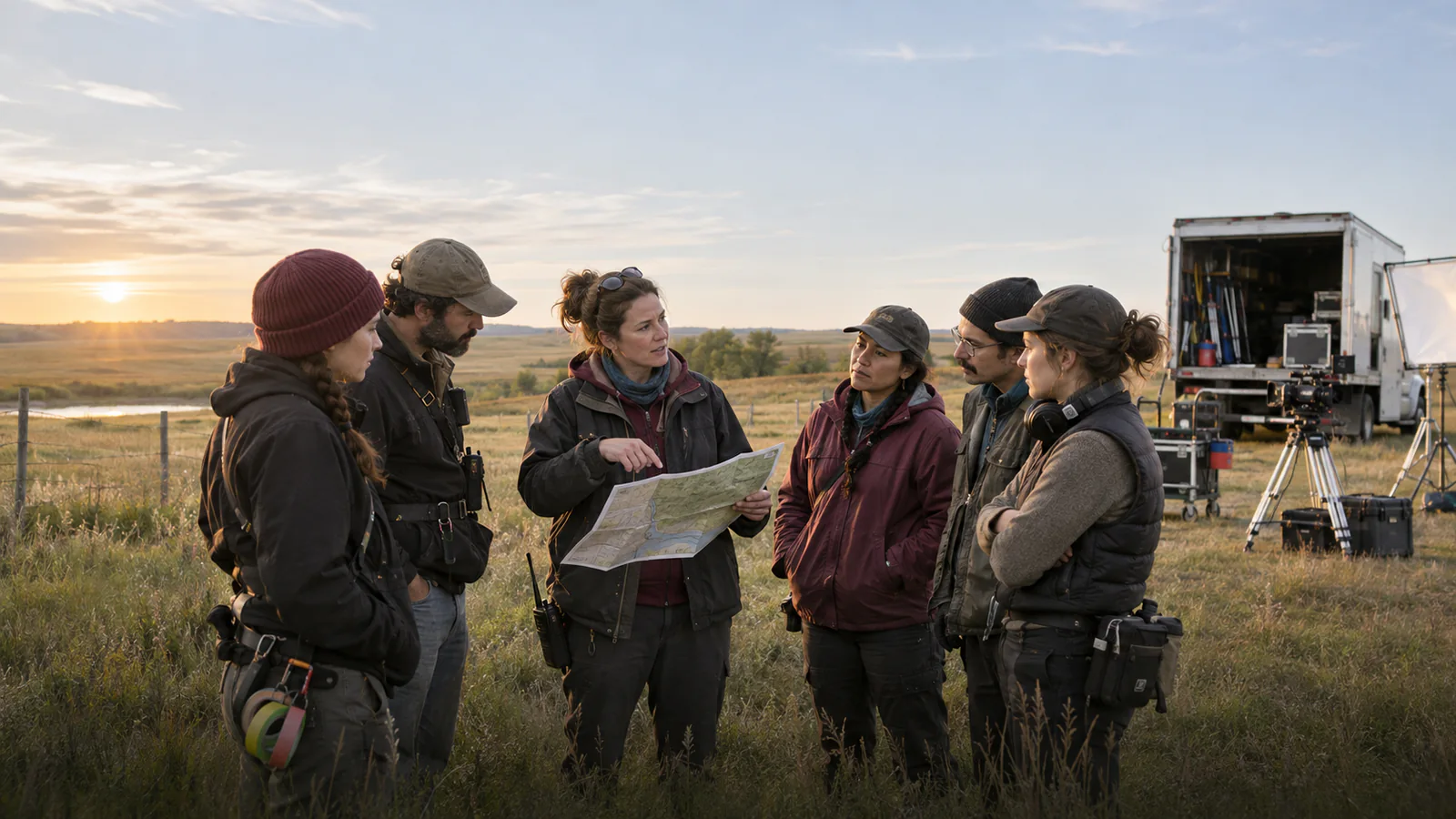
A call sheet tells the crew where and when the day is planned to begin. A useful safety briefing adds the part that can change by the hour: today’s work, location conditions, equipment movement, and the people responsible for each task. Keep it focused on the actual day rather than repeating a generic speech.
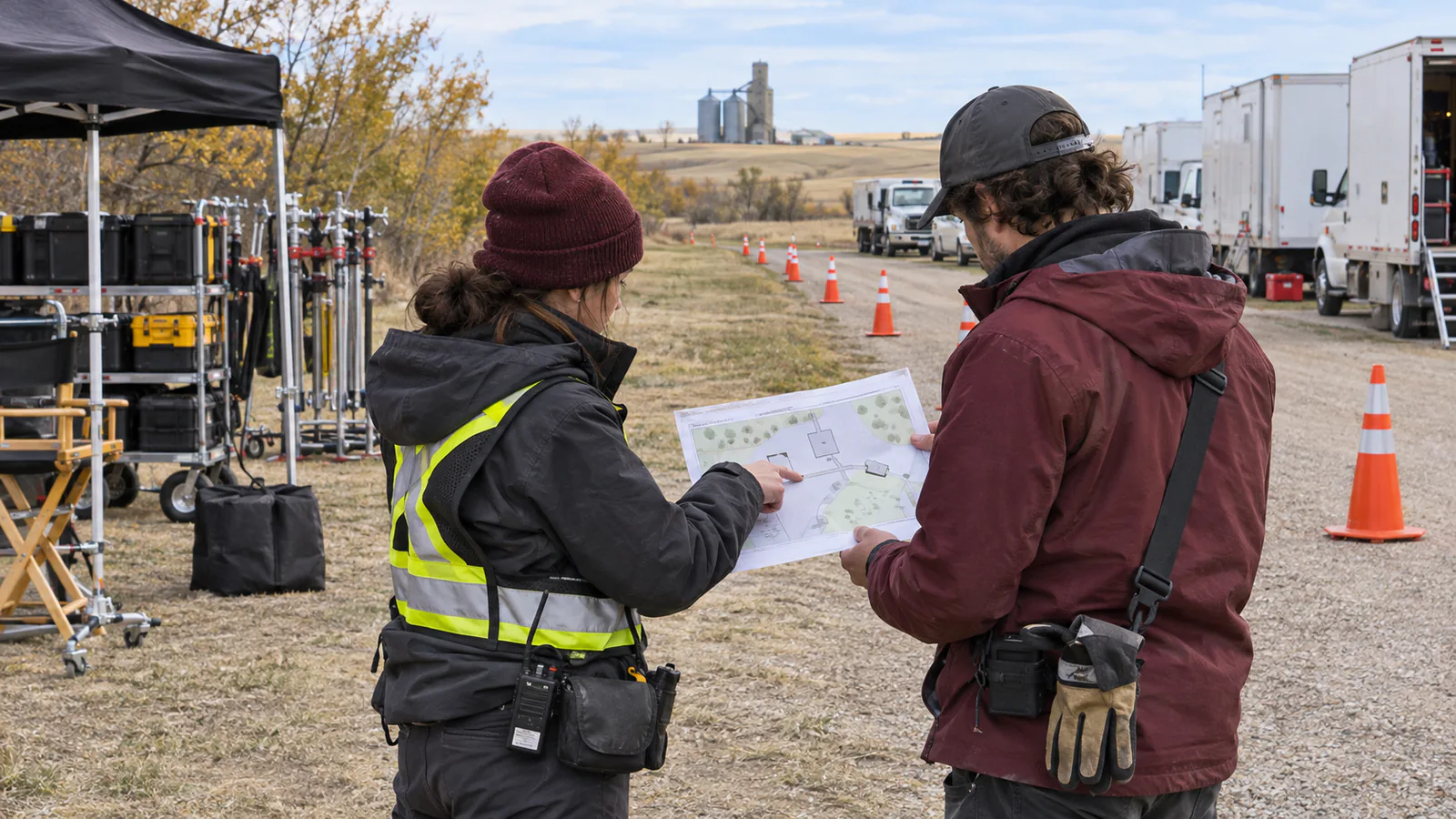
Make the plan specific to today
Before the first setup, name the work that needs special coordination and identify who is leading or supervising it. Include changes since the last briefing: a moved vehicle route, unfamiliar location, weather shift, revised equipment plan, or a new person joining the task. A short conversation gives crew a chance to point out what the plan may have missed.
- What work is planned, and which tasks need a qualified lead or specific training?
- Where will people, vehicles and equipment move, and which routes need to stay clear?
- What hazards or conditions changed, and what controls are in place?
- Who can answer a question, pause a task, and coordinate a response if something changes?
- Where are first aid, emergency information and the day’s communication channels?
Make room for questions and worker input
WorkSafe Saskatchewan explains workers’ rights to know about hazards, take part in workplace health and safety, and refuse work they believe is unusually dangerous. A briefing should leave time for people to ask what they need to know and raise a concern without being rushed past it. The right-to-refuse process has specific steps; check the official guidance if a concern is not resolved.
Close the loop when the plan changes
A briefing only helps if the information reaches the people doing the work. If a setup, location or condition changes, tell the affected crew, update the responsible lead, and check that everyone understands the revised controls before the task continues. Keep the discussion practical and specific to the work in front of you.